

In line with the American Institute in Taiwan's (AIT) recent announcement of new measures to strengthen semiconductor talent development between Taiwan and the US, the Taiwan Aeon Corporation (TAIC) hosted the "2026 Taiwan-US Technology Talent, Innovation R&D, and Industrial Investment Cooperation Summit" on September 2nd at the Caesars Palace Hotel Taipei. Supported by the Taiwan Scholarship Foundation and co-organized by the International Association for Innovation and Entrepreneurship Development, the event brought together representatives from five US state governments, nearly 30 Taiwanese and American universities, and numerous technology companies, totaling approximately 200 experts and scholars. The summit extended cooperation from educational exchange to the commercialization of research results and industrial investment.
Continuing the two-way talent cultivation framework and connecting with the international high-tech ecosystem
At the end of August, AIT Director Gu Liyan announced an expansion of the Fulbright Semiconductor Scholarship and a program to promote study abroad for American students in Taiwan. Education Minister Cheng Ying-yao also pointed out that two-way exchanges can deepen the experience of the semiconductor ecosystem. Building on this, the Taiwan Students' Association launched a summit aimed at elevating one-way scholarships or student exchanges into a transnational talent development channel with institutionalized and financial incentives, enabling the next generation of talent to become leaders in key industries.
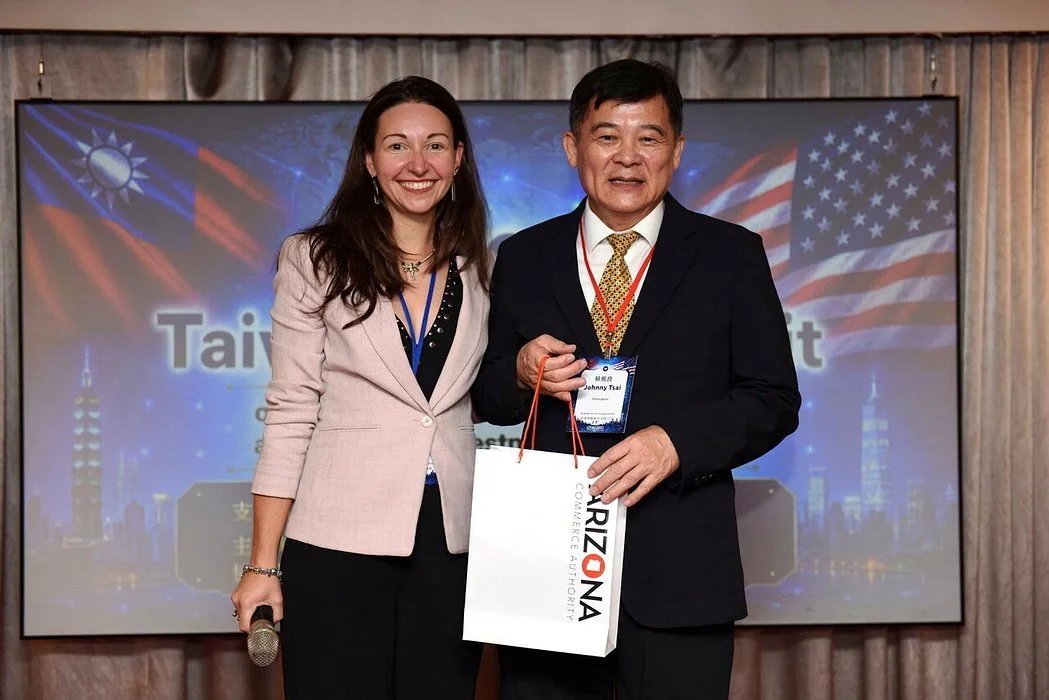
With the support of the Taiwan Academic Exchange Foundation and the co-organization of the International Association for Innovation and Entrepreneurship Development, the Taiwan Students and Scholars Association (TSSA) invited representatives from five US state governments, nearly 30 Taiwanese and American universities, and numerous technology companies, totaling approximately 200 experts and scholars, to participate. This collaboration extended from educational exchange to the commercialization of research results and industrial investment. (Photo provided by Taiwan Students and Scholars Association)
Establish a transnational industry cooperation network by bringing together higher education resources from five states in Taiwan and the United States.
This summit brought together representatives from state governments in Arizona, Idaho, Texas, Montana, and Washington, as well as universities and educational institutions such as the University of Arizona, Arizona State University, Northern Arizona University, Boise State University, University of Idaho, Montana State University, Maricopa Community Colleges, Arizona Western College, and Grand Canyon University.
Representatives from Taiwan, including National Taiwan University, National Yang-Ming National Chiao Tung University, National Central University, National Taiwan University of Science and Technology, National Taipei University of Technology, National Yunlin University of Science and Technology, Tamkang University, National Chi Nan University, Minghsin University of Science and Technology, Chung Yuan Christian University, National Chengchi University, Tunghai University, National Taichung University of Science and Technology, Fu Jen Catholic University, Lung Hwa University of Science and Technology, National Formosa University, and Ming Chi University of Technology, participated in the event. More than 20 listed companies and technology enterprises from Taiwan, including Fanxuan Systems, Hung-Soo Technology, Yuchuan Precision Materials, Dongdian Optoelectronics, Compal Electronics, Hsin-Chin Enterprise, Meda Technology, Syntec Technology, Lianhao Technology, Aneng Composite Materials, and VastGlide Energy Group., also participated in the exchange.
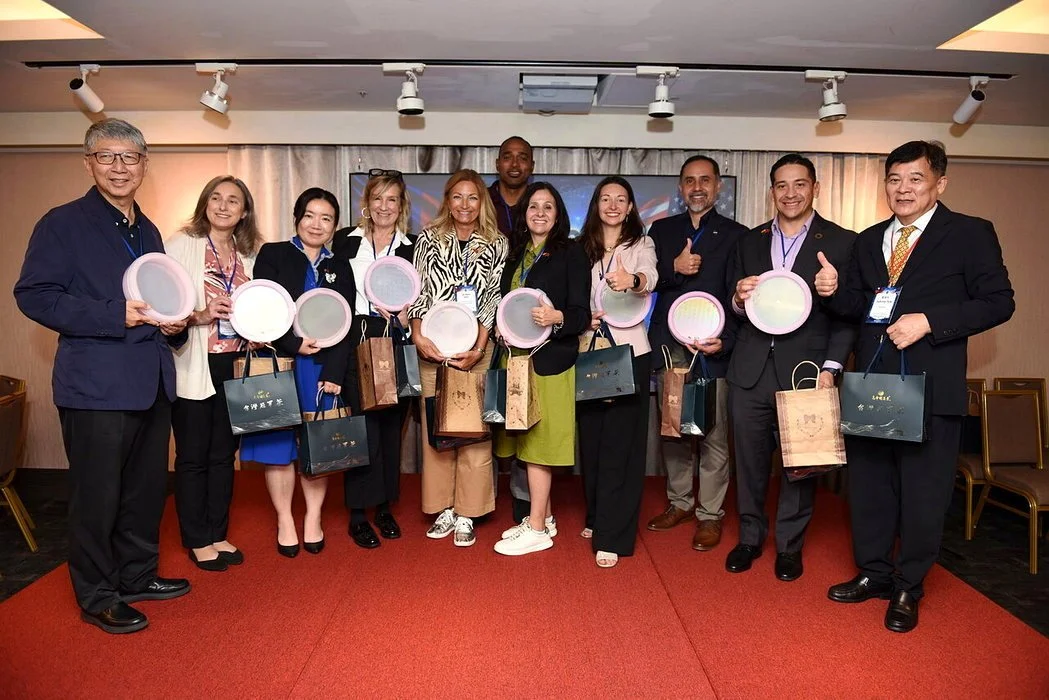
The Taiwan Students and Scholars Association (TSSA) pointed out that the summit planned a complete seven-stage chain, encompassing student exchange, faculty collaboration, joint research, technology transfer, corporate internships, talent employment, and industry investment. This chain connects university research centers, Technology Transfer Centers (TTOs), and industry resources, making talent a crucial node in linking Taiwan and the US in technology industry cooperation. (Photo provided by the Taiwan Students and Scholars Association)
Linking seven stages of development to create a complete technology talent supply chain
The Taiwan Students' Association pointed out that competition in the semiconductor industry has entered an era of systematic planning. The summit planned a complete seven-stage chain, including "student exchange, professor cooperation, joint research, technology transfer, corporate internships, talent employment and industry investment," connecting university research centers, technology transfer centers (TTOs), and corporate academia resources, making talent a crucial node in linking Taiwan and the United States in technology industry cooperation.
Promote one-on-one precise matching to help companies connect with US industrial clusters
To facilitate the implementation of substantive cooperation, the conference has arranged one-on-one matchmaking sessions covering MOU signing, dual degree programs, transnational technology cooperation projects, and patent licensing. The conference also provides consultation channels to help Taiwanese technology companies directly connect with US state government policy resources and industry clusters, lowering the barriers for companies to develop in the US and expand into international markets.
The Taiwan Students' Association stated, "Future Taiwan-US talent cooperation should not be limited to single scholarships or student exchanges, but should gradually form a complete chain from student exchanges and professor collaborations to technology transfer and industrial investment. Taiwan possesses a complete semiconductor supply chain, while the United States has world-class research capabilities and market resources. If both sides can deeply integrate talent and industrial resources, they can create more substantial and long-term cooperative benefits."
Deepening the tripartite cooperation mechanism to create a new landscape for transnational scientific and technological cooperation
Looking ahead, the organizer, the Taiwan Students' Association, will continue to collaborate with the Taiwan Academic Exchange Foundation and the International Association for Innovation and Entrepreneurship Development, integrating Taiwanese and American government, higher education, and business networks. By building a sustainable cooperation platform, the team will strive to make talent the starting point for Taiwanese-American technological cooperation, focusing on scientific research and development to further promote technology implementation and industrial investment, creating a new track for the collaborative development of high-tech industries in Taiwan and the United States.
